
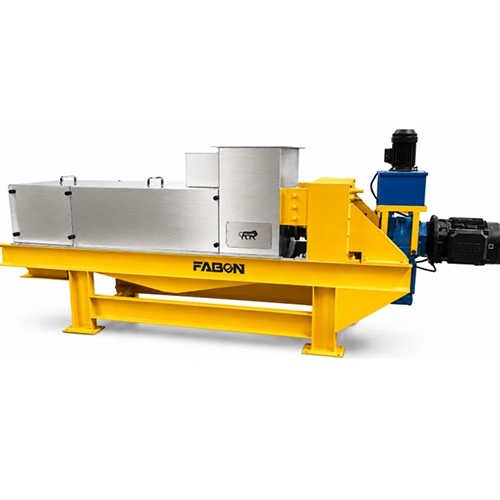
As demand for green energy and bio-based animal feed continues to grow, Napier grass (also known as elephant grass) has become a vital crop in biomass and livestock industries. However, one major challenge in processing Napier grass is its high moisture content, which can reach up to 75–85%. This significantly impacts storage, drying time, and processing efficiency.
|
Sr. No. |
Model |
Capacity |
Motor |
Shed Size |
|
1 |
BM250 |
250 KG/Hour |
58.5 HP |
30*45*20 |
|
2 |
BM500 |
500 KG/Hour |
81.5 HP |
40*50*20 |
|
3 |
BM1000 |
1000 KG/Hour |
1.45 HP |
40*60*25 |
Enter the Napier Grass Dewatering Machine from Fabon Engineering Pvt. Ltd., Nashik — an innovative, cost-effective solution for efficient moisture extraction, designed specifically for Indian agro-climatic conditions.
A dewatering machine is designed to reduce the moisture content of wet biomass by squeezing or pressing the material. In the case of Napier grass, this means reducing the moisture before:
Pelletization or briquetting
Composting or fermentation
Feeding in biogas plants
Animal feed processing
By mechanically removing moisture, the energy cost of drying is significantly reduced, improving overall operational efficiency.
🔄 High-Pressure Twin Roller or Screw Press Design
Optimized to crush and press fibrous Napier grass efficiently.
🌿 Specialized for Green Fodder
Designed specifically for soft-stemmed grasses like Napier, maize stalk, and sugarcane tops.
⚙️ Robust Frame with Anti-Corrosive Coating
Built for long-term use in moist and outdoor environments.
💧 High Moisture Extraction Rate
Reduces moisture from ~80% to 50–60% in a single pass.
🧺 Continuous Operation with Adjustable Pressure
Suitable for large-scale farms and processing plants.
Larger capacities and mobile setups available on request.
Biomass Pellet & Briquette Plants
Organic Waste Management Units
Biogas and Bio-CNG Plants
Dairy & Livestock Farms
Compost and Vermicompost Units
This machine is an ideal pre-processor in any plant where high-moisture green biomass needs to be made more manageable and process-ready.
🚀 Faster drying time — reduces sun-drying or thermal drying costs
💰 Lower fuel consumption in pellet/briquette drying systems
🐄 Better silage and feed handling for dairy farms
🔄 Continuous operation with minimal labor
🛠️ Low maintenance, rugged design for rural environments
🏭 Made in India by industry experts in biomass engineering
🧑🔧 Complete setup support, from site design to installation
🛒 Custom machines available for different crops and capacities
🛠️ Spare parts & service available across India
📞 Reliable after-sales support
A Napier Grass Dewatering Machine is a specialized piece of equipment designed to mechanically extract moisture from high-moisture biomass like Napier grass (elephant grass), maize stalks, and other green fodders. It helps reduce moisture content before drying, pelletizing, composting, or feeding into biogas plants.
Napier grass has a naturally high moisture content (up to 80–85%), which makes it difficult to store, process, or burn efficiently. Dewatering helps:
Reduce drying time and cost
Improve feedstock quality for biogas and pellets
Prevent spoilage during storage
Reduce energy consumption in downstream processes
In a single pass, Fabon’s dewatering machine can typically reduce Napier grass moisture from:
80–85% ➝ 50–55%, depending on the variety and condition of the grass.
Multiple passes or combination with solar/mechanical drying can further reduce moisture.
Custom and mobile units are also available based on your needs.
Yes. While optimized for Napier grass, this machine can also process:
Sugarcane tops
Maize stalks
Soft-stem green fodder
Cowpea plants
Banana stem (limited)
Fabon can also customize the design for other green biomass.
Absolutely. It’s an ideal pre-processing unit for:
Biomass pellet and briquette production
Organic waste-to-energy projects
Silage or animal feed preparation
Composting units
Fabon’s dewatering machines are:
Easy to operate with minimal training
Equipped with adjustable pressure controls
Low maintenance, with accessible rollers and press plates
Built from anti-corrosive and durable materials for outdoor/rural use
Yes. The machine is powered by an electric motor (3-phase). However, diesel engine or PTO-driven models can be provided for off-grid or mobile use.
On-site installation and commissioning
Training for operators and maintenance staff
Spare parts supply and AMC (Annual Maintenance Contracts)
Phone and WhatsApp support for quick troubleshooting
 Biomass Pellet Machine